The Mohs Hardness Scale remains one of the most important tools in modern gemology, jewelry buying, and gemstone durability analysis. Whether you are purchasing a diamond engagement ring, comparing sapphire vs emerald hardness, or learning which gems are safe for daily wear, understanding the Mohs Scale of Hardness helps you make smarter buying guide decisions. Created by Friedrich Mohs in 1812, this scratch resistance system ranks minerals from 1 to 10, with Diamond (Mohs 10) standing as the hardest natural gemstone. Today in 2026, buyers, collectors, jewelry designers, and gemologists rely on the Mohs Scale to evaluate gemstone toughness, longevity, scratch resistance, and overall jewelry performance. From Ruby, Sapphire, Emerald, Tanzanite, Opal, Spinel, Topaz, Quartz, Tourmaline, and Garnet, every gemstone has a unique hardness level that directly affects its wearability, maintenance, and long-term value in the global gemstone market.
What Is the Mohs Hardness Scale?
The Mohs Hardness Scale is a mineral hardness ranking system used to measure how resistant a gemstone or mineral is to scratching. It ranges from 1 (Talc), the softest mineral, to 10 (Diamond), the hardest naturally occurring substance. The scale remains essential in modern gemology because it helps determine which gemstones are durable enough for everyday jewelry such as rings, bracelets, necklaces, and earrings. Understanding gemstone hardness also helps buyers avoid damage, scratches, and costly repairs. In 2026, the Mohs Scale continues to dominate gemstone identification, jewelry design, and gemstone education because consumers increasingly search for durable and wearable gemstones before purchasing fine jewelry. Whether comparing Ruby hardness vs Sapphire hardness, or learning if Opal is too soft for rings, the Mohs Scale provides the foundation for smart gemstone buying decisions and jewelry care.
Definition and History of the Mohs Hardness Scale
The Mohs Scale was created in 1812 by German mineralogist Friedrich Mohs, who developed a simple scratch-testing method to classify minerals according to hardness. Instead of measuring strength or toughness, the Mohs system measures a mineral’s ability to resist scratching from another mineral. Over time, this ranking system became the universal standard in geology, gemology, jewelry manufacturing, and mineral identification. Minerals higher on the scale scratch those lower beneath them. For example, Diamond (10) scratches Corundum (9), while Quartz (7) scratches glass. Although modern gemological labs now use advanced equipment such as spectrometers and refractometers, the Mohs Scale still plays a critical role in gemstone testing, jewelry selection, and gemstone education worldwide. Its simplicity, reliability, and practical application keep it highly relevant in the gemstone market today.
How Mohs Hardness Is Measured (Scratch Test Explained)
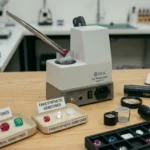
The Mohs Hardness Scale works through a scratch comparison method. If one mineral can scratch another, it is considered harder. For instance, a Ruby or Sapphire (Mohs 9) can scratch Quartz (Mohs 7), while softer stones like Opal (5–6.5) cannot scratch harder minerals. Gemologists use controlled hardness picks and mineral standards to avoid damaging valuable gemstones during testing. Hardness testing helps identify gemstones, estimate durability, and determine appropriate jewelry settings. Buyers also use Mohs hardness information when choosing engagement rings or everyday jewelry because harder gemstones resist scratches better over time. However, hardness does not equal toughness. A gemstone may be hard but still brittle. For example, Diamond is extremely hard but can chip under strong impact. Understanding this distinction helps jewelry buyers make more informed decisions in the modern gemstone market.
Common Misconceptions About the Mohs Hardness Scale
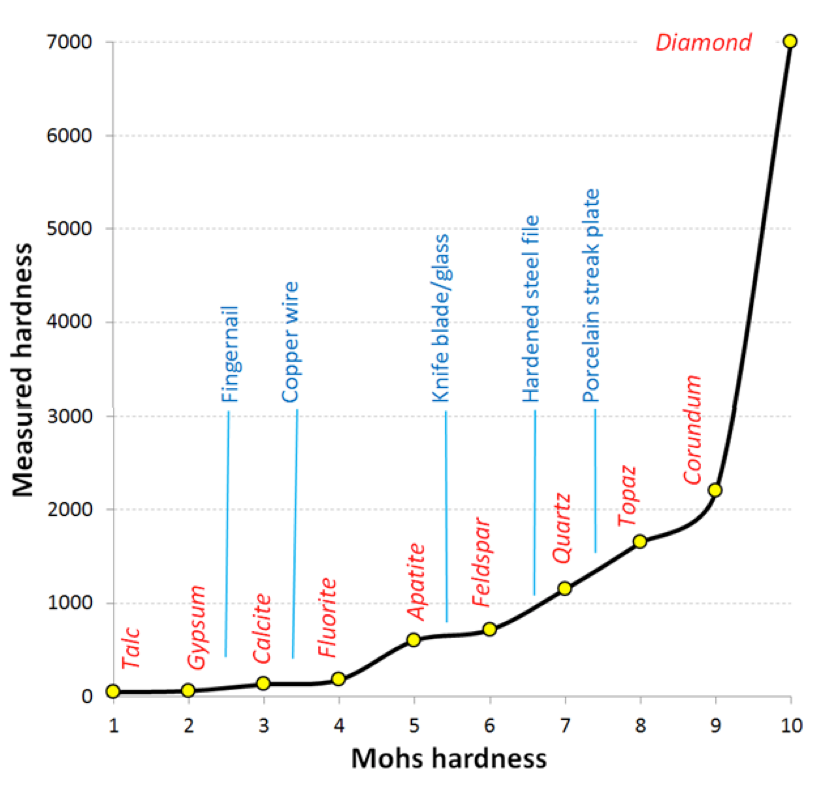
One of the biggest misconceptions about the Mohs Scale is that the numbers increase evenly. In reality, the difference between hardness values becomes dramatically larger toward the top of the scale. For example, Diamond at 10 is vastly harder than Sapphire at 9. Another misconception is that hardness means durability. While hardness measures scratch resistance, gemstones also vary in toughness and stability. Emeralds, for example, have a strong hardness of 7.5–8 but often contain inclusions that make them more vulnerable to fractures. Many buyers also confuse hardness with indestructibility, assuming diamonds cannot break. In truth, even hard gemstones require proper care and protective settings. Understanding the limitations of the Mohs Scale helps gemstone collectors, investors, and jewelry buyers evaluate gemstones more accurately while avoiding costly mistakes in gemstone purchasing and daily jewelry wear.
Why Mohs Hardness Matters in 2026
In 2026, gemstone buyers are more educated than ever before, and durability has become a major factor in jewelry purchasing decisions. Consumers now actively search for terms like best gemstones for everyday wear, most durable engagement ring stones, and scratch-resistant gemstones before making purchases. The Mohs Hardness Scale helps buyers compare gemstones based on long-term wearability and maintenance requirements. With increasing demand for investment gemstones and luxury jewelry, hardness rankings now influence pricing, resale value, and consumer confidence. Durable gemstones such as Diamond, Sapphire, Ruby, Chrysoberyl, and Spinel remain highly sought after because they maintain their appearance over decades of wear. Softer stones like Opal or Turquoise still attract collectors but require extra care. Understanding Mohs hardness has therefore become essential for both casual jewelry buyers and serious gemstone investors worldwide.
Why Mohs Hardness Affects Gemstone Durability
A gemstone’s Mohs hardness directly impacts its resistance to surface scratches, abrasions, and long-term wear. Jewelry exposed to daily contact with metal, countertops, dust, or other gems can gradually lose polish if the stone lacks sufficient hardness. Harder gemstones like Sapphire (9) and Spinel (8) maintain their brilliance far longer than softer stones such as Turquoise (5–6) or Malachite (3.5–4). This is especially important for rings and bracelets, which receive the most physical contact. Modern jewelry buyers increasingly prioritize gemstones with hardness ratings above 7 because these stones balance beauty with practical durability. The Mohs Scale therefore acts as a durability guide for consumers, helping them select gemstones appropriate for their lifestyle, occupation, and daily wear habits while protecting long-term jewelry investments.
How Mohs Hardness Impacts Jewelry Longevity
Jewelry longevity depends heavily on gemstone hardness because scratches can reduce brilliance, transparency, and resale value over time. Harder stones preserve their polish and facet edges much better, making them ideal for heirloom jewelry pieces. For example, Diamond, Ruby, Sapphire, Alexandrite, and Chrysoberyl often remain visually stunning even after decades of wear. Softer gems like Opal or Pearl require careful storage and occasional polishing to maintain their appearance. In 2026, buyers increasingly prefer durable gemstones for engagement rings and luxury jewelry because they want pieces capable of lasting generations. Jewelers also use Mohs hardness when recommending protective settings such as bezel settings for softer stones. By understanding gemstone hardness, consumers can choose jewelry designed for both beauty and long-term durability.
The Role of Mohs Hardness in Modern Gemstone Buying
Modern gemstone buying has become increasingly data driven, with consumers researching hardness, treatment methods, origin, and durability before purchasing. The Mohs Scale helps buyers compare gemstones objectively while balancing beauty with practicality. Search trends now show rising interest in phrases like best hardness for engagement rings, hardest gemstones after diamond, and durable colored gemstones. Buyers often prioritize stones above Mohs 7 for daily wear because they resist scratches from household dust and common materials. Gemologists and jewelers also use hardness information to explain price differences between gemstones. Harder gemstones generally command higher prices because they last longer and perform better in jewelry. As online gemstone shopping continues expanding globally, Mohs hardness has become one of the most searched and trusted gemstone buying factors in 2026.
How Gemologists and Buyers Use the Mohs Scale
The Mohs Scale is widely used by gemologists, jewelers, collectors, and consumers to evaluate gemstone suitability for jewelry, identify minerals, and prevent gemstone damage. In professional gemology, hardness testing supports gemstone identification and authenticity analysis. For buyers, it acts as a practical guide for selecting gemstones appropriate for engagement rings, bracelets, pendants, or collector specimens. Modern jewelry consumers increasingly compare gemstones not only for color and beauty but also for durability and long-term maintenance. Understanding hardness helps buyers avoid selecting fragile stones for high-impact jewelry pieces. In 2026, Mohs hardness knowledge has become especially important as alternative gemstones such as Spinel, Tsavorite, Tanzanite, and Paraiba Tourmaline gain popularity in luxury jewelry markets worldwide.
Using Mohs Hardness to Choose the Right Gemstone
Choosing the right gemstone depends heavily on lifestyle and intended jewelry use. Hard gemstones like Diamond (10), Ruby (9), and Sapphire (9) are excellent for engagement rings because they resist scratches exceptionally well. Medium-hardness stones such as Topaz (8), Spinel (8), and Tourmaline (7–7.5) also perform well in everyday jewelry with proper care. Softer gemstones like Opal, Pearl, or Turquoise are better suited for earrings, pendants, or occasional wear pieces. Buyers who understand the Mohs Scale can balance beauty with practicality while avoiding costly damage and repairs. In today’s gemstone market, hardness awareness helps consumers select jewelry that fits both their fashion preferences and daily activities.
Mohs Scale in Gemstone Identification and Testing
Gemologists often use hardness testing as part of gemstone identification procedures. While modern laboratories rely on advanced instruments, the Mohs Scale still provides valuable preliminary insights during gemstone analysis. Certain gemstones share similar appearances but differ greatly in hardness. For example, Glass imitations may resemble Sapphire or Emerald but scratch much more easily. Hardness testing can therefore help distinguish genuine gemstones from imitations or synthetics. However, professionals conduct these tests carefully to avoid damaging valuable stones. In combination with refractive index measurements, magnification, and spectroscopy, Mohs hardness remains an important component of modern gemstone authentication and identification.
How Buyers Can Use Mohs Hardness to Avoid Scratches
Consumers can use Mohs hardness knowledge to reduce jewelry damage and extend gemstone lifespan. Rings worn daily should ideally contain gemstones above Mohs 7 because household dust itself contains Quartz particles capable of scratching softer stones. Buyers should also avoid storing hard gemstones next to softer gems, since harder stones can scratch softer surfaces. Protective settings, padded jewelry boxes, and routine cleaning further help maintain gemstone appearance. Understanding hardness also helps buyers choose suitable gemstones for different activities and lifestyles. Someone with an active lifestyle may prefer Sapphire or Spinel over softer gems like Opal or Pearl. By using Mohs hardness strategically, buyers can protect their jewelry investments while maintaining long-term gemstone beauty.
Beryl Family Gemstones (With Mohs Hardness Table)
The Beryl Family gemstones form one of the most important mineral groups in gemology, admired for their exceptional durability, broad color range, and strong presence in fine jewelry. All varieties share a consistent Mohs hardness of 7.5–8, making them reliable, scratch resistant, and suitable for long term everyday wear an essential factor buyers search for. The group includes world famous gemstones like Emerald, Aquamarine, Morganite, Heliodor, and the extremely rare Red Beryl (Bixbite). Each stone carries unique characteristics, but all maintain the signature beryl toughness, elevating the family’s desirability in the global gemstone market and boosting its value among collectors, investors, and jewelry lovers.
Beryl Family Gemstones – Mohs Hardness Table
| Gemstone | Mohs Hardness |
|---|---|
| Mohs Hardness Emerald | 7.5 – 8 |
| Mohs Hardness Aquamarine | 7.5 – 8 |
| Mohs Hardness Morganite | 7.5 – 8 |
| Mohs Hardness Heliodor | 7.5 – 8 |
| Mohs Hardness Goshenite | 7.5 – 8 |
| Mohs Hardness Golden Beryl | 7.5 – 8 |
| Mohs Hardness Maxixe | 7.5 – 8 |
| Mohs Hardness Red Beryl (Bixbite) | 7.5 – 8 |
Corundum Family Gemstones (With Mohs Hardness Scale Table)
The Corundum Family gemstones are among the most durable, valuable, and historically significant minerals in the world, celebrated for their incredible Mohs hardness of 9, second only to diamond. This elite hardness makes corundum ideal for all jewelry types, including rings and daily wear pieces, giving it superior scratch resistance and long term performance. The family includes the fiery and iconic Ruby, prized for its pure red saturation, and the vast Sapphire group, admired for its endless colors from deep blue to rare varieties like Padparadscha Sapphire, known for its lotus blossom blend of pink and orange, and Golden Sheen Sapphire, recognized for its shimmering metallic effect. Together, these gemstones hold a significant place in luxury jewelry, investment markets, and collector circles due to their durability, brilliance, and rarity.
Corundum Family Gemstones – Mohs Hardness Table
| Gemstone | Mohs Hardness |
|---|---|
| Mohs Hardness Ruby | 9 |
| Mohs Hardness Sapphire (Blue) | 9 |
| Mohs Hardness Padparadscha Sapphire | 9 |
| Mohs Hardness Golden Sheen Sapphire | 9 |
Quartz Group Gemstones (With Mohs Hardness Table)
The Quartz Group gemstones are among the world’s most abundant and diverse mineral families, valued for their beauty, durability, and wide color spectrum. All quartz varieties share a dependable Mohs hardness of 7, making them strong enough for daily wear jewelry while remaining affordable and accessible to every type of collector. This group includes popular stones such as Amethyst, Citrine, Smoky Quartz, and Rose Quartz, along with microcrystalline varieties like Chalcedony, which expands into sub groups such as Agate, Onyx, and Carnelian. Rare blends like Ametrine combine purple and yellow zones naturally, while Aventurine sparkles with aventurescence, and Bloodstone (Heliotrope) stands out for its deep green base with red patterns. Together, these gemstones dominate the gemstone market due to their versatility, spiritual significance, and consistent performance.
Quartz Group Gemstones – Mohs Hardness Table
| Gemstone | Mohs Hardness |
|---|---|
| Mohs Hardness Amethyst | 7 |
| Mohs Hardness Citrine | 7 |
| Mohs Hardness Smoky Quartz | 7 |
| Mohs Hardness Rose Quartz | 7 |
| Mohs Hardness Chalcedony | 7 |
| Mohs Hardness Agate | 7 |
| Mohs Hardness Onyx | 7 |
| Mohs Hardness Carnelian | 7 |
| Mohs Hardness Ametrine | 7 |
| Mohs Hardness Aventurine | 7 |
| Mohs Hardness Bloodstone (Heliotrope) | 7 |
Feldspar Group Gemstones (With Mohs Hardness Table)
The Feldspar Group gemstones are some of the most visually captivating minerals on Earth, known for their iridescence, optical effects, and wide variety of colors. These gemstones typically display a Mohs hardness of 6–6.5, offering moderate durability suitable for pendants, earrings, and carefully worn rings. The group includes the mystical Moonstone, prized for its moonlit glow; the vibrant Labradorite, famous for its striking flashes of blue and green; and the sparkling Sunstone, admired for its aventurescent, metallic shimmer. Other members include soothing Amazonite, recognized for its turquoise green hues, and classic Orthoclase, a key mineral in moonstone formation. Together, these Feldspar gemstones attract jewelry designers, collectors, and crystal enthusiasts with their striking uniqueness, captivating light play, and powerful metaphysical appeal. Their color shifts, shimmering adularescence, and natural beauty make Feldspar minerals some of the most sought after stones in both fine jewelry and crystal healing.
Feldspar Group Gemstones – Mohs Hardness Table
| Gemstone | Mohs Hardness |
|---|---|
| Mohs Hardness Moonstone (Adularia) | 6 – 6.5 |
| Mohs Hardness Labradorite | 6 – 6.5 |
| Mohs Hardness Sunstone | 6 – 6.5 |
| Mohs Hardness Amazonite | 6 – 6.5 |
| Mohs Hardness Orthoclase | 6 – 6.5 |
Garnet Group Gemstones (With Mohs Hardness Table)
The Garnet Group gemstones represent one of the most diverse and widely loved mineral families, known for their rich colors, strong brilliance, and excellent durability. Most garnets fall within a reliable Mohs hardness range of 6.5 to 7.5, making them suitable for daily wear jewelry while offering both beauty and resilience. The group includes deep red Almandine, fiery and intense Pyrope, vibrant orange Spessartine, and the rare, emerald green Tsavorite, one of the most valuable garnet varieties. Their natural brilliance, combined with their affordability and wide availability, has made garnets extremely popular among jewelry designers, gem collectors, and gemstone enthusiasts worldwide.
Garnet Group Gemstones – Mohs Hardness Scale Table
| Gemstone | Mohs Hardness |
|---|---|
| Mohs Hardness Almandine | 7 – 7.5 |
| Mohs Hardness Pyrope | 7 – 7.5 |
| Mohs Hardness Spessartine | 6.5 – 7.5 |
| Mohs Hardness Tsavorite | 7 – 7.5 |
Tourmaline Group Gemstones (With Mohs Hardness Table)
The Tourmaline Group gemstones are celebrated for their extraordinary color diversity, strong durability, and popularity in fine jewelry and collector markets. All tourmalines share a dependable Mohs hardness of 7 to 7.5, making them well suited for daily wear jewelry while offering good scratch resistance and long term durability. This versatile group includes colorful varieties such as Elbaite, the most common gem quality tourmaline; Indicolite, admired for its rich blue hues; Rubellite, known for its vivid pink to red tones; and Dravite, recognized for its earthy brown shades. The rare and highly valuable Paraiba Tourmaline, famous for its neon blue to green glow caused by copper content, is one of the most sought after gemstones in the world. With their exceptional color range, optical appeal, and structural strength, tourmalines remain a top choice for designers, collectors, and gemstone investors.
Tourmaline Group Gemstones – Mohs Hardness Table
| Gemstone | Mohs Hardness |
|---|---|
| Elbaite Mohs Hardness | 7 – 7.5 |
| Indicolite Mohs Hardness | 7 – 7.5 |
| Paraiba Tourmaline Mohs Hardness | 7 – 7.5 |
| Rubellite Mohs Hardness | 7 – 7.5 |
| Dravite Mohs Hardness | 7 – 7.5 |
Spinel Group Gemstones (With Mohs Hardness Scale Table)
The Spinel Group gemstones are admired for their exceptional brilliance, rich color diversity, and outstanding durability, making them one of the most underrated yet rapidly rising gemstone families. With a strong Mohs hardness of 8, spinel offers excellent scratch resistance and long lasting wear, ideal for engagement rings and fine jewelry. Spinel naturally occurs in a wide range of colors including red, blue, pink, purple, orange, black, and gray each highly valued for its vibrant saturation and crystal clarity. Historically mistaken for ruby and sapphire, Spinel has earned significant recognition in modern gemology due to its beauty, rarity, and natural untreated nature. Today, collectors and designers appreciate Spinel for its brilliance, affordability, and increasing investment potential.
Spinel Group Gemstones – Mohs Hardness Table
| Gemstone | Mohs Hardness |
|---|---|
| Mohs Hardness Spinel (all colors) | 8 |
Topaz Gemstone (With Mohs Hardness Table)
Topaz is one of the most durable and brilliantly colored gemstones in the world, prized for its exceptional clarity, vibrant hues, and remarkable Mohs hardness of 8. Known for its strong durability and high refractive index, Topaz is ideal for everyday jewelry, including rings, pendants, and high end designs. Natural Topaz occurs in a wide range of colors such as golden Imperial Topaz, sky to Swiss Blue Topaz (commonly treated), and soft pink to peach tones found in Pink Topaz. Because of its impressive brilliance, affordability, and durability, Topaz has become a top choice among jewelers, collectors, and gemstone enthusiasts seeking beauty with structural strength.
Topaz – Mohs Hardness Table
| Gemstone | Mohs Hardness |
|---|---|
| Topaz Mohs Hardness | 8 |
Tanzanite (Zoisite Variety) – With Mohs Hardness Scale Table
Tanzanite, the rare blue-to-violet variety of the Zoisite family, remains one of the most significant gemstone discoveries of modern times. Found only in Tanzania’s Merelani Hills, it is far rarer than many traditional gemstones. Tanzanite amazes collectors with its strong pleochroism, displaying flashes of blue, violet, and burgundy from different viewing angles. With a Mohs hardness of 6 to 7, it offers moderate durability, performing best in protected ring settings and excelling in pendants and earrings. Its single source origin, vivid color, and growing global demand have made Tanzanite a highly sought after gemstone among designers, collectors, and investors. As supply continues to tighten, Tanzanite’s value and desirability keep rising across the global market.
Tanzanite (Zoisite) – Mohs Hardness Table
| Gemstone | Mohs Hardness |
|---|---|
| Mohs Hardness Tanzanite (Zoisite variety) | 6 – 7 |
Zircon Gemstone – With Mohs Hardness Table
Zircon is a natural gemstone prized for its brilliance, high refractive index, and wide range of colors, from colorless to yellow, brown, red, and even blue. With a Mohs hardness of 7.5, Zircon offers good durability for rings, pendants, and other jewelry when handled with care. Unlike synthetic cubic zirconia, natural Zircon is a crystal that exhibits strong fire and luster, making it a brilliant alternative for collectors seeking affordable yet high quality gemstones. Zircon has been valued throughout history for its vibrant colors and rarity, particularly blue Zircon, which is often heat treated to enhance its shade. Its combination of beauty, clarity, and respectable hardness makes Zircon a favorite among jewelers, gemologists, and gemstone enthusiasts worldwide.
Zircon – Mohs Hardness Scale Table
| Gemstone | Mohs Hardness |
|---|---|
| Zircon Mohs Hardness | 7.5 |
Chrysoberyl Gemstones – With Mohs Hardness Table
The Chrysoberyl gemstone family is celebrated for its brilliance, durability, and rare color changing properties, with Alexandrite being the most famous variety. Chrysoberyl has an impressive Mohs hardness of 8.5, making it highly durable and ideal for rings, earrings, and daily wear jewelry. Alexandrite captivates collectors with its exceptional pleochroism, shifting from vibrant green in daylight to deep red under incandescent light. This dramatic color transformation sets Alexandrite apart and makes it one of the most coveted and valuable gemstones in the world. Other Chrysoberyl varieties include the golden yellow Cymophane cat’s eye, known for its chatoyancy, which adds to the group’s versatility and charm. With exceptional hardness, striking optical phenomena, and rarity, Chrysoberyl remains a favorite among collectors, jewelers, and investors seeking unique and valuable gemstones.
Chrysoberyl Gemstones – Mohs Hardness Table
| Gemstone | Mohs Hardness |
|---|---|
| Chrysoberyl Mohs Hardness | 8.5 |
| Alexandrite Mohs Hardness | 8.5 |
Peridot (Olivine) Mohs Hardness Scale
Peridot, the gemstone variety of Olivine, is admired for its bright olive green hues and remarkable natural glow. With a Mohs hardness of 6.5–7, it offers moderate durability, making it suitable for most jewelry when properly cared for. Its rich color is caused by iron within its structure, making Peridot one of the few gems whose color is inherent, not impurity based. Ancient civilizations treasured Peridot for protection and prosperity, and today it remains highly sought after for its fresh, vibrant tones. Its balanced durability, unique formation, and striking color make Peridot a universally appealing gemstone.
Peridot (Olivine) – Mohs Hardness Table
| Gemstone | Mohs Hardness |
|---|---|
| Mohs Hardness Peridot (Olivine) | 6.5–7 |
Sphene (Titanite) Mohs Hardness Scale
Sphene, also known as Titanite, is celebrated for its extraordinary fire and brilliance, surpassing even diamonds in dispersion. With a Mohs hardness of 5–5.5, it is softer than many gems and best suited for protected jewelry designs. Its vivid color range yellow, green, brown, and orange combined with its dazzling rainbow flashes makes it one of the most spectacular collector’s stones. Sphene’s high refractive index and distinct birefringence give it unmatched sparkle and complexity. Although delicate, its optical beauty and rarity secure its position as a premium gem for connoisseurs.
Sphene (Titanite) – Mohs Hardness Table
| Gemstone | Mohs Hardness |
|---|---|
| Mohs Hardness Sphene (Titanite) | 5–5.5 |
Kunzite (Spodumene Variety)
Kunzite, the pink-violet variety of Spodumene, is admired for its soft pastel hues and strong pleochroism, shifting colors as it moves. With a Mohs hardness of 6.5–7, it offers good wearability but must be protected from strong impacts and prolonged sunlight. Its gentle coloration and high clarity make Kunzite a favorite in luxury jewelry and large statement pieces. Many gems show beautiful transparency and brilliance, making them ideal for contemporary and elegant designs. Kunzite’s delicate beauty and gemological uniqueness make it a treasured gemstone for collectors and designers.
Kunzite – Mohs Hardness Table
| Gemstone | Mohs Hardness |
|---|---|
| Mohs Hardness Kunzite (Spodumene) | 6.5–7 |
Opal (Amorphous)
Opal is renowned for its mesmerizing play-of-color, displaying brilliant flashes of green, blue, violet, and red. Because Opal is amorphous and contains water, its Mohs hardness varies from 5–6.5, making it softer than crystalline gemstones. Its structure diffracts light through microscopic silica spheres, creating its signature rainbow effect. From Black Opal to White, Boulder, and Fire Opal, each type offers a distinct visual identity. Opal’s unparalleled optical beauty and rarity keep it in high demand among jewelers, collectors, and gemstone enthusiasts.
Opal – Mohs Hardness Table
| Gemstone | Mohs Hardness |
|---|---|
| Mohs Hardness Opal (Amorphous) | 5–6.5 |
Turquoise (Phosphate Mineral)
Turquoise is an opaque phosphate mineral known for its captivating sky blue to greenish blue hues, often highlighted by stunning natural matrix patterns. With a Mohs hardness of 5–6, it is relatively soft, making stabilization a common practice to enhance durability. Revered for thousands of years, Turquoise carries deep cultural and spiritual significance across civilizations. Its unique veining, color saturation, and natural patterns make each piece one of a kind. Today, Turquoise remains a timeless and highly collectible gemstone in both traditional and modern jewelry.
Turquoise – Mohs Hardness Table
| Gemstone | Mohs Hardness |
|---|---|
| Turquoise Mohs Hardness | 5–6 |
Pearl, Amber, Coral (Organic Gemstones)
Pearl, Amber, and Coral are organic gemstones, formed through natural biological processes rather than mineral crystallization. In Pearl (2.5–4.5) is cherished for its luster and elegance, forming inside mollusks. Amber (2–2.5) originates from fossilized tree resin and often contains ancient inclusions. Coral (3–4) is created in marine environments and valued for its deep red, orange, and pink hues. While softer than minerals, these gems hold immense cultural and historical value. Their natural beauty, rarity, and symbolic meanings make them important in fine jewelry around the world.
Organic Gemstones – Mohs Hardness Table
Lapis Lazuli (Composite Stone With Lazurite)
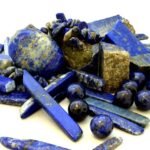
Lapis Lazuli is a composite gemstone composed primarily of lazurite, with inclusions of pyrite and calcite, giving it its deep blue color and gold-like metallic sparkle. With a Mohs hardness of 5–5.5, it is moderately soft but highly valued for artistic carvings and ornamental jewelry. Its ultramarine blue pigment has been sought after for thousands of years, even used in historic masterpieces by famous artists. High quality Lapis displays rich uniform blue with minimal calcite veins. Its legendary beauty and cultural influence make it a cherished gemstone to this day.
Lapis Lazuli – Mohs Hardness Table
| Gemstone | Mohs Hardness |
|---|---|
| Lapis Lazuli Mohs Hardness | 5–5.5 |
Malachite & Azurite (Copper Carbonates)
Malachite and Azurite are copper carbonate gemstones known for their vibrant colors Malachite with its striking green banding and Azurite with deep royal blue tones. With a Mohs hardness of 3.5–4, both stones are relatively soft and most often used in carvings, beads, and polished display pieces. Their beautiful patterns and bold colors have made them historically significant and highly collectible. Due to their softness, they require careful handling, but their aesthetic value is unmatched in decorative arts. These copper minerals remain among the most visually captivating and culturally rich gemstones.
Malachite & Azurite – Mohs Hardness Table
| Gemstone | Mohs Hardness |
|---|---|
| Malachite Mohs Hardness | 3.5–4 |
| Azurite Mohs Hardness | 3.5–4 |
Common Minerals and Gemstones on the Mohs Scale (2026)
The Mohs Scale includes minerals and gemstones ranging from extremely soft Talc to ultra-hard Diamond. In modern gemology, hardness rankings help determine gemstone suitability for various jewelry applications. Harder gemstones are generally preferred for engagement rings and daily wear jewelry, while softer gems often appear in collector pieces or occasional-wear designs. In 2026, gemstones like Diamond, Sapphire, Ruby, Spinel, Topaz, Tourmaline, Emerald, Tanzanite, Opal, and Quartz continue dominating consumer search trends because buyers increasingly prioritize both beauty and durability. Understanding where gemstones rank on the Mohs Scale helps buyers compare wearability, maintenance needs, and long-term value.
Full Mohs Scale List: From Talc to Diamond (2026)
The Mohs Scale begins with Talc (1), followed by Gypsum (2), Calcite (3), Fluorite (4), Apatite (5), Orthoclase Feldspar (6), Quartz (7), Topaz (8), Corundum including Ruby and Sapphire (9), and finally Diamond (10). Each level represents increasing scratch resistance, though the differences become much larger near the top of the scale. Diamond is dramatically harder than Corundum despite being only one number higher. Modern gemologists still use this scale because it provides a fast and practical reference for gemstone durability, jewelry design, and mineral identification.
Popular Gemstones and Their Mohs Hardness Values
Many of today’s most popular gemstones fall between Mohs 6 and 10. Diamond ranks at 10, while Ruby and Sapphire both measure 9. Chrysoberyl reaches 8.5, Spinel and Topaz rank at 8, and Emerald falls between 7.5 and 8. Quartz gemstones such as Amethyst and Citrine measure 7, while Tanzanite ranges from 6 to 7. Softer gemstones include Opal (5–6.5), Turquoise (5–6), and Pearl (2.5–4.5). These hardness values help buyers compare gemstone durability while choosing jewelry appropriate for everyday wear or occasional use.
How to Read a Mohs Hardness Chart
Reading a Mohs hardness chart is relatively simple once buyers understand the ranking system. Higher numbers indicate greater scratch resistance, meaning harder stones can scratch softer ones. Jewelry buyers should generally prioritize gemstones above Mohs 7 for rings and daily wear jewelry. Softer stones can still be beautiful choices but may require protective settings and careful maintenance. Mohs charts also help consumers compare gemstone families quickly while understanding durability differences between stones such as Sapphire, Emerald, Opal, and Tourmaline. In 2026, visual hardness charts and interactive gemstone comparison tools have become extremely popular among online gemstone buyers and collectors.
Mohs Hardness for Jewelry Buyers: Rings, Necklaces, Bracelets
Jewelry buyers use Mohs hardness rankings to determine which gemstones can withstand daily wear. Rings and bracelets typically require harder gemstones because they face frequent impact and abrasion. Earrings and pendants can safely feature softer stones since they experience less physical contact. Understanding gemstone hardness therefore helps consumers balance aesthetics, durability, maintenance, and long-term value. In modern jewelry markets, hardness knowledge has become a key part of informed gemstone buying.
Mohs Hardness for Engagement Rings and Wedding Bands
Engagement rings require gemstones capable of handling constant daily wear. For this reason, Diamond, Ruby, and Sapphire remain the most popular engagement ring gemstones because they combine beauty with exceptional durability. Spinel, Alexandrite, and Topaz are also gaining popularity as durable alternative engagement ring stones. Softer gems like Opal and Pearl may look stunning but require extra care and protective settings. Buyers increasingly research Mohs hardness before purchasing engagement jewelry to ensure their rings maintain brilliance and structural integrity over time.
Choosing Gemstones for Earrings and Necklaces
Earrings and necklaces allow buyers greater flexibility because these jewelry pieces experience less physical impact than rings. Softer gemstones such as Opal, Turquoise, Moonstone, Pearl, and Lapis Lazuli perform much better in pendants and earrings than in rings. Jewelry designers often reserve delicate gemstones for low-impact jewelry settings to reduce the risk of scratches and chips. Buyers who love softer gems can therefore still enjoy them safely when selecting appropriate jewelry designs.
Best Mohs Hardness for Everyday Wear Jewelry
For everyday jewelry, gemstones above Mohs 7 are generally considered ideal because they resist scratches from common dust and household materials. Sapphire, Ruby, Spinel, Topaz, Quartz, Tourmaline, and Chrysoberyl all offer excellent wearability for regular use. Buyers seeking heirloom quality jewelry often prioritize gemstones within this durability range. Harder stones maintain their polish, facet sharpness, and brilliance far longer than softer gems, making them excellent long-term investments in both luxury and fashion jewelry.
GemstonesCraft Guide: How to Use the Mohs Scale with Your Gemstone Collection
Collectors and jewelry enthusiasts can use the Mohs Scale to organize, protect, and maintain their gemstone collections more effectively. Understanding hardness allows collectors to store gemstones safely, prevent scratches, and select proper jewelry settings. In 2026, educational gemstone tools and hardness visualizers have become increasingly popular among gemstone collectors who want better protection for valuable gems.
Step-by-Step Guide to Checking Mohs Hardness at Home
Home hardness testing should always be done cautiously to avoid damaging gemstones. Collectors can begin by comparing gemstones against common materials such as glass or steel while avoiding excessive pressure. Using a jeweler’s loupe, magnification, and reference hardness kits can provide safer results. However, buyers should avoid testing expensive gemstones aggressively because improper testing can permanently scratch surfaces. Professional gemological testing remains the safest option for valuable stones.
How to Use Mohs Hardness with Gemstones from GemstonesCraft
Gemstone collectors can use hardness information to determine which stones are suitable for daily wear and which require extra care. Harder gemstones like Sapphire, Spinel, and Topaz can safely appear in rings, while softer stones such as Opal or Turquoise perform better in pendants or collector displays. Using Mohs hardness knowledge also helps buyers create balanced gemstone collections with varying levels of durability, rarity, and investment potential.
When to Use Lab Tests vs Mohs Hardness for Precision
Although the Mohs Scale provides useful durability insights, professional gemological laboratories offer far greater accuracy for gemstone identification and authenticity verification. Advanced tools such as refractometers, spectrometers, and microscopes reveal treatments, origins, and synthetic enhancements beyond the scope of hardness testing. Buyers investing in expensive gemstones should therefore combine Mohs hardness knowledge with professional certification for maximum confidence and protection.
FAQ For Mohs Hardness
The Mohs hardness scale ranks gemstones from 1 to 10 based on their scratch resistance. Diamond is the hardest at 10, while softer organic gems like Pearl and Amber range from 2–4.5.
Emerald has a hardness of 7.5–8, but internal inclusions can make it more brittle compared to other Beryl varieties.
Corundum (Ruby & Sapphire) is the second hardest gemstone with a Mohs hardness of 9.
All Tourmalines, including Elbaite, Indicolite, Paraiba, Rubellite, and Dravite, have a Mohs hardness of 7–7.5.
Diamond ranks 10 on the Mohs Scale, while Sapphire and Ruby rank 9. Emerald measures around 7.5–8, making these gemstones highly durable and ideal for fine jewelry and daily wear.
Yes. Softer gemstones like Opal, Pearl, Turquoise, and Amber are suitable for jewelry when worn carefully, especially in earrings and pendants.
The Mohs test provides a practical estimate of scratch resistance but is not as precise as advanced laboratory measurements. Professional gemological testing remains more accurate for authentication and scientific analysis.
No. Hardness testing is only one part of gemstone identification. Gemologists also use refractive index testing, spectroscopy, magnification, and other advanced tools to confirm gemstone identity and authenticity.
Absolutely. Despite modern technology, the Mohs Scale remains one of the most widely used systems in gemology, jewelry buying, gemstone education, and durability evaluation worldwide.
Mohs hardness specifically measures resistance to scratching by another mineral. Scratch resistance in jewelry can also depend on toughness, crystal structure, cleavage, and gemstone stability under daily wear conditions.
Conclusion
The Mohs Hardness Scale Guide 2026 remains an essential resource for gemstone buyers, collectors, jewelers, and gemologists seeking to understand gemstone durability and jewelry longevity. From ultra-hard Diamond (10) and Corundum gemstones like Ruby and Sapphire (9) to softer gems such as Opal, Pearl, and Turquoise, every gemstone offers unique advantages and care requirements. Understanding Mohs hardness helps consumers choose the right gemstones for engagement rings, daily wear jewelry, collector investments, and heirloom designs. As gemstone education continues expanding globally, hardness awareness has become one of the most important factors influencing modern jewelry buying decisions. By using the Mohs Scale effectively, buyers can protect their gemstone investments, select jewelry that fits their lifestyle, and enjoy the natural beauty of gemstones for generations.