Epidote crystal is one of the most underrated yet powerful metamorphic minerals in both professional gemology and advanced crystal healing. With a chemical formula of Ca₂(Al,Fe)₃(SiO₄)₃(OH) and a diagnostic 25° twinning structure, epidote stands apart as a technically fascinating and energetically transformative stone. Ranking 6–7 on the Mohs hardness scale, this calcium aluminum iron silicate forms in dynamic geological environments and is globally sourced from Pakistan, Peru, Austria, Mexico, and the United States. From pure green prismatic crystals to manganese-rich piedmontite and granite-hosted unakite, epidote offers both mineralogical depth and metaphysical intensity. This 2026 authority guide delivers complete identification mastery, heart chakra activation systems, buying intelligence, and collector-level insight.
TOTAL IDENTIFICATION MASTERY
What is Epidote Crystal? Ca₂(Al,Fe)₃(SiO₄)₃(OH) Complete Breakdown
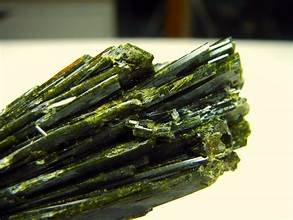
Epidote is a calcium aluminum iron sorosilicate mineral belonging to the epidote-supergroup family, crystallizing in the monoclinic system and most commonly forming elongated prismatic crystals. Its pistachio green to olive coloration comes from iron content, while manganese substitution produces the red brown variety known as piedmontite. Epidote typically develops in regional metamorphic rocks, hydrothermal veins, and contact metamorphic environments. With refractive index values between 1.71–1.78 and specific gravity of 3.3–3.5, epidote is denser and optically stronger than many look-alike green minerals. Understanding its structural and chemical composition is essential for both gemstone authentication and mineral investment.healing practices.
Epidote crystal structure – monoclinic 25° twinning diagnostic
One of epidote’s most powerful identification features is its 25-degree twinning angle, a structural characteristic rarely duplicated by impostor stones. These penetration twins create intergrown crystal forms that appear sharply angled under magnification. Professional gemologists and mineral collectors rely on this twinning diagnostic to confirm authenticity, particularly when distinguishing epidote from diopside or vesuvianite. The monoclinic symmetry gives epidote its elongated habit and strong striations along the crystal length.
Epidote chemical formula – calcium aluminum iron silicate
The formula Ca₂(Al,Fe)₃(SiO₄)₃(OH) defines epidote as a complex sorosilicate containing calcium, aluminum, iron, silicon, and hydroxyl groups. Iron concentration controls color saturation, while trace manganese results in piedmontite’s red-brown tone. This chemical flexibility is what places epidote within a broader mineralogical supergroup.
Epidote mineral group – complete epidote-supergroup family
The epidote supergroup includes minerals such as clinozoisite, zoisite, and piemontite (piedmontite). Each shares structural similarities but varies chemically. This classification is critical for advanced collectors and geology professionals studying metamorphic mineral assemblages.
Epidote vs 6 Impostors: Never Buy Fakes Guide
Green epidote is often confused with diopside, vesuvianite, actinolite, green tourmaline, serpentine, and unakite matrix material. However, epidote’s higher refractive index, stronger pleochroism, and distinct 25° twinning separate it from these look-alikes. Buyers searching for “real epidote crystal” or “natural green epidote stone” must rely on hardness testing (6–7 Mohs), streak color (white to colorless), and specific gravity analysis to avoid misidentification.
Epidote vs diopside – twinning angle differentiation
Diopside lacks the 25° penetration twinning diagnostic and typically shows lower refractive index values. Under magnification, epidote’s internal structure appears more fibrous and complex.
Epidote vs vesuvianite – color & cleavage comparison
Vesuvianite often displays more uniform color and different cleavage patterns. Epidote shows stronger pleochroism and elongated crystal habit.
Epidote vs unakite – pure crystal vs granite matrix
Unakite is not pure epidote but a granite composite of epidote, pink feldspar, and quartz. Pure epidote appears as individual prismatic crystals, while unakite is opaque and mottled.
Real epidote test – streak, hardness, specific gravity
Authentic epidote registers 6–7 Mohs, white streak, and SG 3.3–3.5. These physical constants protect buyers from imitation stones.
Epidote Nuclear Specifications
| Property | Epidote | Unakite | Piedmontite | Actinolite |
|---|---|---|---|---|
| Mohs | 6–7 | 6–7 | 6–7 | 5–6 |
| RI | 1.71–1.78 | 1.71–1.78 | 1.75–1.80 | 1.61–1.63 |
| SG | 3.3–3.5 | 2.8–3.0 | 3.4–3.5 | 3.0–3.3 |
| Twinning | 25° | None | 25° | None |
| Chakra | Heart | Heart/Sacral | Heart | Heart |
Piedmontite Epidote: Manganese Red-Brown Powerhouse
Piedmontite is the manganese-rich variety of epidote, displaying deep red to reddish-brown coloration. This rare metamorphic mineral forms in manganese-rich environments and is highly valued by collectors. Energetically, piedmontite is considered a deep transformation stone, amplifying shadow work and emotional resilience.
Piedmontite healing properties – deep transformation energy
Metaphysically, piedmontite is linked to intense emotional clearing, helping release suppressed trauma and stagnant heart chakra energy.
Piedmontite vs green epidote – manganese color origin
The red coloration results from manganese replacing iron in the crystal lattice, altering both optical response and energy symbolism.
Unakite Epidote Matrix: Pregnancy & Balance Stone
Unakite combines green epidote with pink orthoclase feldspar and quartz, forming a supportive and grounding stone. It is often marketed as a pregnancy support stone and emotional balance crystal due to its gentle heart-centered vibration.
Unakite vs pure epidote – matrix healing differences
While pure epidote amplifies energy intensely, unakite moderates that amplification, making it more suitable for beginners.
Unakite pregnancy support – gentle epidote application
Crystal healers associate unakite with nurturing energy, emotional stability, and reproductive wellness support practices.
Epidote Heart Chakra Complete System: 21-Day Transformation Protocol
Epidote is known as an energy amplifier, particularly for the heart chakra. Over a structured 21-day cycle, practitioners use epidote for emotional awareness, accountability, and subconscious pattern recognition.
Epidote heart chakra opening – unconditional acceptance ritual
This practice focuses on daily intention setting while meditating with epidote placed over the heart center.
Epidote shadow work protocol – 7-day emotional clearing
Shadow integration exercises combined with journaling enhance emotional transformation.
Epidote self-sabotage clearing – subconscious reprogramming
Because epidote amplifies internal states, it reveals limiting patterns that must be consciously shifted.
The History and Lore of Epidote
The discovery of epidote dates back to the late 18th century, with early records in epidote mindat and mineralogist descriptions highlighting its formation in Alpine clefts. Historically, epidote in quartz and epidote with pyrite were believed to amplify personal power and clear negative energy. Many cultures considered epidote a stone of growth, encouraging both material prosperity and emotional healing. Prehnite with epidote has long been associated with heart-centered energies, while black epidote and clinozoisite epidote variants were often revered for their grounding abilities.
Epidote Meaning and Symbolism
The meaning of epidote centers on personal transformation, spiritual growth, and abundance. Crystal healers call it the “stone of increase” because epidote crystal actively amplifies the energy and intentions you focus on. When you work with epidote, you strengthen emotional healing, accelerate spiritual development, and enhance manifestation practices. Many practitioners use epidote and quartz combinations to align their intentions with universal energy and attract positive outcomes. This powerful green crystal symbolizes renewal, inner strength, confidence, and the courage to embrace meaningful change in life.
Epidote Healing Properties
Epidote crystal plays a powerful role in modern crystal healing practices because it actively amplifies energy and personal growth. Many healers use epidote to restore emotional balance, release negativity, and break limiting beliefs that block success and confidence. Green epidote in quartz strengthens the heart chakra, encouraging compassion, forgiveness, emotional clarity, and unconditional love. Crystal practitioners combine epidote with prehnite to calm the nervous system, improve digestion, and support recovery from emotional stress or trauma. Many meditators place massive epidote clusters in their sacred space to cleanse the aura, raise vibrations, and deepen inner peace during meditation sessions.
Epidote Stone Birthstone Significance
While epidote is not a traditional birthstone, it holds special significance for those seeking to align with the heart chakra. Its green hues resonate with individuals born under the signs of Taurus, Virgo, and Capricorn, promoting grounding and emotional stability. Pink epidote, yellow epidote, and red epidote varieties offer subtle variations for those who resonate with unique color energies. Whether worn as jewelry or used in crystal grids, epidote provides a meaningful connection to nature’s nurturing energy.
Types and Forms of Epidote
Epidote is not just a single green crystal it exists in multiple mineral varieties, color forms, and geological habits that influence its value, healing reputation, and collector demand. Understanding the types of epidote crystal and its structural forms is essential for accurate identification, buying decisions, and mineral classification. Below is a clear, informative breakdown designed for both gem enthusiasts and serious collectors.
Green Epidote (Classic Iron-Rich Epidote)
Green epidote is the most common and commercially recognized form. Its color ranges from pistachio green to dark olive, depending on iron concentration. It typically forms elongated prismatic crystals with strong vertical striations and diagnostic 25° twinning. This variety is widely used in mineral collections and heart chakra crystal healing. Major sources include Pakistan, Austria, Mexico, and the United States. Because of its moderate Mohs hardness (6–7), it is sometimes used in pendants and specimen jewelry but is primarily valued as a collector mineral.
Piedmontite (Manganese-Rich Red Epidote)
Piedmontite (also spelled piemontite) is a manganese-rich variety of epidote that appears red, reddish-brown, or purplish. The manganese replaces iron in the crystal structure, altering both color and refractive index. It is rarer than green epidote and highly collectible, especially specimens from Italy and Peru. In metaphysical markets, piedmontite is associated with deep emotional transformation and intensified heart chakra work.
Unakite (Epidote in Granite Matrix)
Unakite is not pure epidote but a granite composed of green epidote, pink orthoclase feldspar, and clear quartz. It is opaque and commonly polished into beads, cabochons, and tumbled stones. Unakite is popular in jewelry and crystal therapy due to its balanced appearance and softer energy profile. Compared to pure epidote crystals, unakite is more affordable and beginner-friendly.
Clinozoisite (Iron-Poor Epidote Variety)
Clinozoisite is an iron-poor member of the epidote supergroup and usually appears lighter green to grayish. Because it contains less iron, it lacks the deep pistachio tone of classic epidote. Clinozoisite is more common in metamorphic rocks and less frequently sold in the crystal market, but it remains important in geological classification.
Zoisite (Closely Related Mineral Form)
Zoisite belongs to the same mineral group and shares structural similarities with epidote. It forms in the orthorhombic system instead of monoclinic. Tanzanite (blue zoisite) is the most famous gem quality variety. While not technically epidote, zoisite is part of the broader epidote mineral family and often discussed alongside it.
FAQs About Epidote
Epidote is a calcium aluminum iron silicate mineral with formula Ca2(Al,Fe)3(SiO4)3(OH) that forms in metamorphic rocks and has 6–7 Mohs hardness.
Real Epidote shows 25-degree twinning, Mohs hardness of 6–7, refractive index 1.71–1.78, and specific gravity 3.3–3.5.
Epidote is primarily associated with the Heart Chakra and is believed to amplify emotional awareness and transformation.
Primarily the heart chakra, but also supports the solar plexus for confidence.
While green Epidote is common, rarer forms like red Epidote and Prehnite with Epidote are highly sought after.
Yes! It pairs well with Quartz, Prehnite, Moldavite, and Tourmaline.
Use smudging, moonlight, or sound to cleanse Epidote’s energy.
It’s generally safe, but long exposure to water may damage some specimens.
Yes, Epidote fosters emotional growth and encourages healthy relationships.
Major sources include Austria, Pakistan, Brazil, USA, and Russia.
Conclusion for Epidote
Epidote is a fascinating gemstone that captivates collectors and enthusiasts with its rich pistachio green hues and powerful metaphysical properties. Beyond its visual appeal, Epidote offers a unique combination of emotional healing and energetic amplification, making it a treasured stone for spiritual practitioners and jewelry lovers alike. Whether you’re drawn to its vibrant color or its reputed ability to enhance personal growth and manifestation, Epidote stands out as a versatile and meaningful addition to any gemstone collection. Proper care ensures its lasting beauty and energetic benefits, allowing you to enjoy this remarkable crystal for years to come.